


Five For Fighting – Can One Man Save the World?


Five For Fighting
Can One Man Save the World?
By Jay S. Jacobs
In his hit song of many years ago, Five For Fighting songwriter and leader John Ondrasik pointed out that “you only have 100 years to live.” We last interviewed Ondrasik right as that song was climbing the charts – it has almost been a quarter of that century since. The world has changed and we both have changed, but it was nice to find that Ondrasik is the same thoughtful, funny, empathetic guy we spoke with so long ago.
Ondrasik had already been performing for years when a global tragedy – the 9/11 attacks on The World Trade Center and the Pentagon – thrust a song which he had released months earlier into the spotlight. “Superman (It Ain’t Easy)” was not about the attacks, but it shared a vulnerability, sadness, and strength that the country and the world at large embraced in a time of tragedy.
A few years later, he climbed the charts again with the elegiac ballad “100 Years,” in which Ondrasik charted a human life from childhood to old age. Over the years he has continued to record, has released many studio and live albums and had several other hit singles – “Easy Tonight,” “The Devil in the Wishing Well,” “The Riddle,” “What If?” and more.
Ondrasik has been extremely active in supporting the American troops, and his music has taken on an urgent humanitarian bent. He has written songs about the war in Ukraine (“Can One Man Save the World?”), Afghanistan (“Blood on My Hands”), the Israel-Hamas conflict (“OK [We Are Not OK]” and a revised version of “Superman” with new lyrics dedicated to the Israeli hostages.)
We caught up with Ondrasik recently right as he was starting the latest Five For Fighting tour – and in characteristic fashion, the new tour finds him doing something unexpected: trading the rock band for a piano and string quartet. We talked about his career, his extensive philanthropy, his surprising day job and the state of the world.
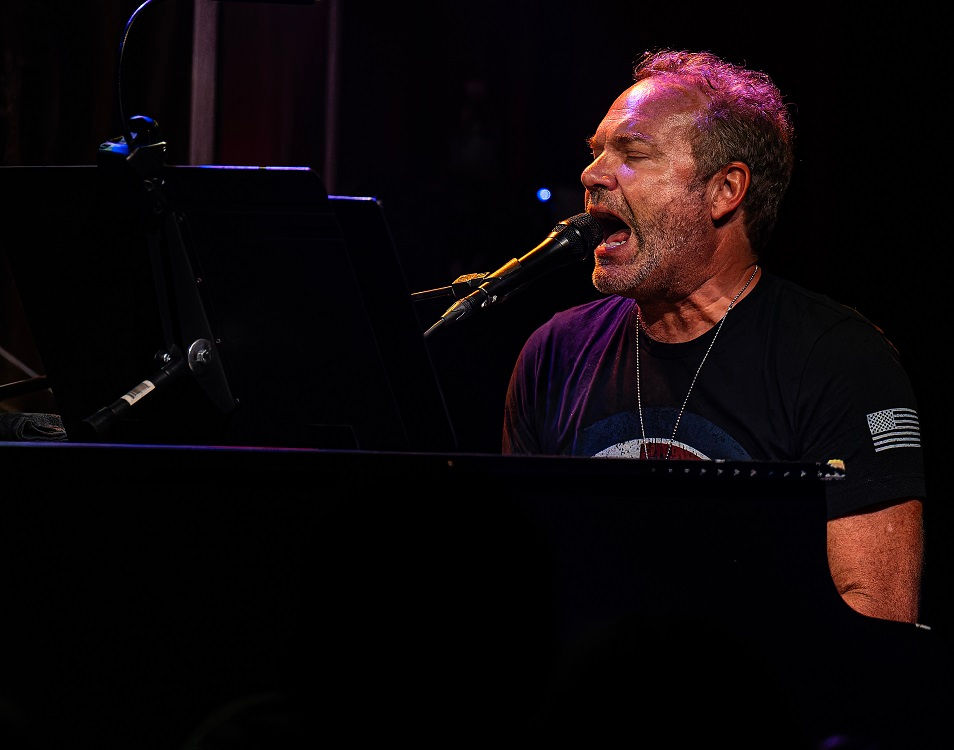
Nice to speak with you again. We did an interview back in 2004. It's been a long time.
(laughs) Yes, it has.
You've been performing professionally for almost 40 years, and Five For Fighting has been going for over 30. When you started, could you have ever imagined that you'd still be playing music all this time later?
Certainly, it was a dream. I think if you would ask me the odds, I would have said it's pretty low. I like to say I was a 15-year overnight success. I struggled a long time. When we talked in 2004, that's when “100 Years” came out, right? “Superman” had done his thing, but I was kind of a one-hit wonder at the time, and you never know. But once “100 Years” became what it did, I'm like, okay maybe I'll be able to sing these songs for the next 30 years. To still be able to do it and have people come sing along with me is truly a blessing.
You've had one of the more distinctive voices in pop rock for over two decades. When you look back at the early stuff, what do you think defined your sound? Is it still the same things with your newer music?
Somebody told me once there's certainly a lot of better singers than me, but to have a voice that you recognize pretty instantly is a good thing to have. I think I do have one of those voices. Again, it's hard for me to believe it's been 25 years since “Superman” came out. I do think that voice and the songs that talk about our daily lives and feelings – live in the moment, it's not easy to be me – are things that are just universal. But, when “Superman” came out, the piano was not on the radio. It was boy bands, grunge music. It wasn’t in 1977, where Billy and Elton owned the charts. So I think the piano coming back with “Superman” and a few other artists bringing it back [made it stand out at the time]. That's also been part of my experience with “The Riddle” and “Chances” and “What If” and some of the other songs that weren't as big as those two songs, but they continued to bring that sound back to the radio. For me, I still believe my best song is ahead of me. (laughs) I'm still writing. I'm still that guy. Most nights the voice still works pretty good. I don't look at my career as then. I look at it as now, and what can I do next? I've had some pretty amazing experiences the last couple years.
As amazing as it is to think, last week was the 25th anniversary of the World Trade Center attacks. “Superman” wasn't written specifically about the attacks when it was recorded, but it connected as a healing anthem for the country that was in mourning. How does it feel that your song was able to help the country come to terms with that tragic situation?
It was hard to wrap my head around then. It's hard to wrap my head around now. It all came crashing back this week. I was in New York doing multiple performances. I played at the New York Firefighters 25th Memorial. Some of those firefighters last Wednesday were at The Concert for New York [on October 21, 2001]. We talked about that and how it mattered for them. Frankly, seeing many of the families and the firefighters 25 years later, react to me playing “Superman,” it was emotional for all of us. It just reminded me of how that song provided solace for a lot of people in the nation. I'm glad songs like that were there. Certainly, nobody wants a song to associate with any tragedy, but music has a unique way of providing solace, providing a release.
It certainly does.
I remember playing that night [at The Concert For New York City]. It wasn't my performance that I remember. It was the Who. They came out and played “Baba O'Riley.” Literally, I was sitting side stage, and I'm surprised the roof didn't blow off Madison Square Garden. I looked out at the audience, and everybody's crying and hugging and singing, and most of those folks had been down at Ground Zero, wading through the carnage. That performance gave them a chance to release their pain, their struggles and share that with 20,000 other people, and frankly, 26 million people in America. That experience has really stuck with me. The music transcends charts and hits and ticket sales every once in a while.
That’s true.
I felt some of that again this week. We performed under the two light beams that shoot up from New York City, representing the towers on the night of 9/11. It was incredibly – I don't even know the word – emotional for me to do and have 10 firefighters and police and Port Authority standing on that stage with me. It really was heavy. One last thing that I'll add that I've been talking about in media this week is a little spark of light in this dark memory. When I was at the firefighters' events on Staten Island, I met probably four or five children of firefighters who died that day. They were in their 20s or 30s. They were five or six years old on 9/11. They had joined the fire department. They continued their father's legacy. They were in the fire department. That gave me a jolt of hope and inspiration. Then I was subsequently told that they just crossed 100. So since 9/11, over 100 children of firefighters or NYPD who died that day have joined our first responders. That's pretty awesome.
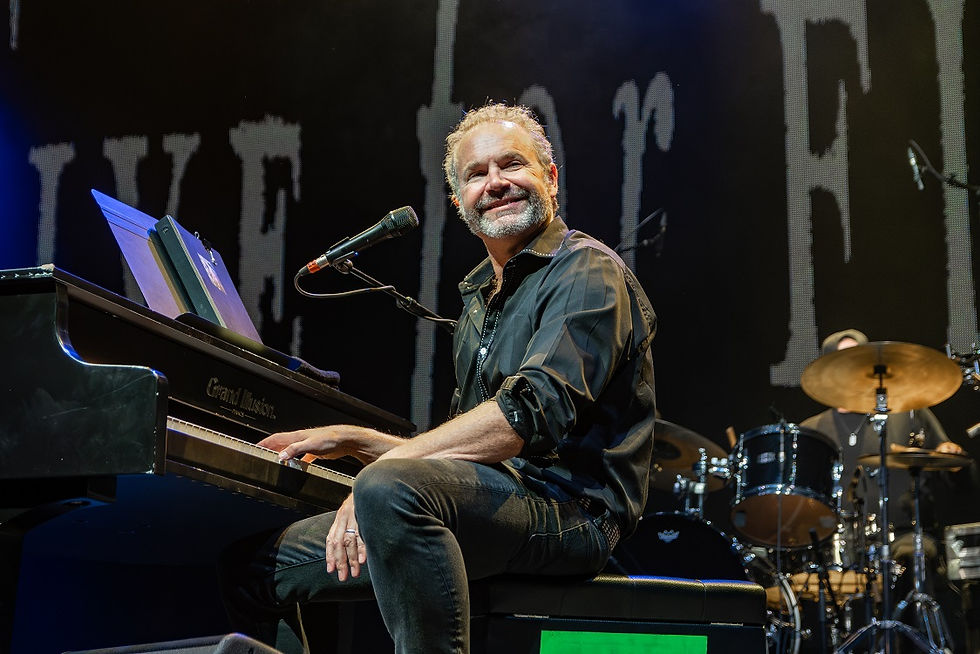
You've also written a lot over the years about soldiers and our troops and war and the human costs. What draws you to those stories, and how do you write about conflict without making it overly political, making it more personal to you?
Well, because it is personal. I don't have members of my family who are in the military, but when “Superman” came out, and particularly “100 Years,” it was during the Iraq War. I would get emails from our troops saying, “I use your song to decompress after a mission,” or “I use your song to pump myself up,” or “I use your song just to escape this war.” It became very clear to me how our soldiers use music in their wellness. That led me to performing with the USO and interacting with many charities and doing the CD for the Troops Project. Then for the last 15 years, me and Gary Sinise took that mantle to tell their stories and to be there for our troops. I would like to think if there's one thing that's not political, it's supporting our troops. Of course, I'm naive on that (laughs), but for me, they give us all these blessings of freedom and the ability to disagree and ability to say what we want to say. It's been by far the honor of my career. I look forward to continuing to do that. I've met just incredible people. Sometimes in our business, we think of heroes as celebrities or athletes, and then you meet some of these special forces’ guys. (laughs again) You're just glad they're on our side.
How has your creative process evolved over the years as a writer?
I wouldn't say the process has changed. Just my situation has changed. Back in the day, I would write hundreds of songs during the year. I didn't have a tried-and-true method. Sometimes I wrote a lyric first. Sometimes I wrote a melody. Sometimes I took a concept. For me, a lot of it was just pure work ethic. It wasn't some magic sauce. It's like: write a lot of songs and hopefully you get a couple that stick. That's still how I do it, I just don't have deadlines. I don't have the desire, or frankly the energy, to write 100 songs a year. So basically, now if something strikes me and an event happens, like Afghanistan or Ukraine or the hostages in Gaza, if there's something that moves me to write something, I do. Though I did just for the first time in a long time, finish a song that has nothing to do with world events. It's just a normal song. (laughs)
Imagine that.
My daughter Olivia opens for us with her folk duo Lace and Lee. I've been in this with her the last couple years, and that's really sparked my desire to write and to record and to produce. To do that again in that kind of setting. So I'm hoping that in the next year or two, that there'll be another Five For Fighting album. I'm not going to be the guy that puts out the single every few months. I'm going to do it old school. I like the albums, and so I kind of have the bug again to do it. But the process remains the same. Get in there, do a lot of work tapes, listen to hundreds of hours of ideas, and find those two bars. For me, that's not going to change.
I was just going to ask you about your daughter. Over the years, I've heard you talk about her in concerts often. What is it like now to have her opening for you?
We come out and to her credit, she never tells anybody she is my daughter. They bring the house down. You might be aware of the [Five For Fighting] song, “I Just Love You,” that she inspired as a four-year-old. Halfway through my set, I'll start playing. “I Just Love You,” and then she'll come out and she'll sing it with me. I'm not sure I made it through a version yet without a little bit of a tear, but it's great. My son works with me in our family business where I am right now, so I have that wonderful thing. Then Olivia is on the road. They bring such energy and joy and innocence and fear and all this stuff we had as young artists. I could talk for hours. Also she's just finishing up her solo work called The Vibe Project. I'm Dad, but it's pretty stunning. She's much further along than I was at her age, so I'm very excited for her to share that with the world as well. As you can see, I can talk for hours about Olivia.

Now that you're further along in your 100 years, what do you feel that you've learned that a younger you might not have appreciated?
(laughs) The sentiment of that song is to appreciate the moment. (laughs again) I think I'm a little better at that. A little more nostalgic. Also the lyric of the bridge of “100 Years” is suddenly you're wise. So I'm on that bridge now. Hopefully, I'm a little wiser than I was. I've learned to appreciate and enjoy and spend time on things outside of the music business. As I said, we have our family business. It's a big commitment for me. I'm a husband.
What is your family business?
We have a company called Precision Wire Products. It started in 1946. Our claim to fame is we make the best shopping cart in the world. If you shop at Costco, you use our cart. I've been here since I was 15 years old, even when I had the hits. My dad's 88, he still runs the show. He's amazing. It's a small business, has about 300 employees, and it takes a lot of time and effort. California can be a challenge for manufacturers, so that has always been kind of my second hat. Music's here, and I think it's also been good. It's kept me in the real world a little bit. So, that also takes a lot of my time. But in my 60s, me and my wife, we still have the health to go do things. I've spent a lot of time on the road and a lot of time fulfilling obligations. Now we're going to take some time and go do some things and enjoy this last third of our lives.
Over the years, I've seen you performing in lots of different ways, I've seen you performing solo piano. I've seen you performing it with a band. The new tour is with the string quartet. Is that just with the string quartet, or is that a band as well as the string quartet?
It's me at the piano and the quartet. About 15 years ago, a little after we chatted, I started doing symphony shows, which were just amazing because to have a symphony behind these songs, it gives you chills. [It] also allows me to pull songs from my catalog that I don't do with the rock band. Songs like “Devil and the Wishing Well,” “Nobody,” “Two Lights,” that have these genius arrangements from some world-class composers. We wanted to take that to smaller markets, to smaller towns. So we reduced the arrangements to string quartet, and now we've been doing it for… I don't know… 13 years, which is crazy. My MD Katie [Kresek] just won a Tony Award for Moulin Rouge. They're all like Broadway savants, so for me to watch them every night is a treat, and to share that with my audiences again is just a blast.
One of my favorite songs is "If God Made You.” I don't suppose that's going to be one of the ones you're doing?
Yeah, I actually bring Katie up and we do a duet together. That's probably, I would say, my top three songs to sing every show. We don’t do it every night, but we do it most nights. Especially with Katie, it's one of my favorite things.
Do you have any other deep cuts or maybe new covers that you're planning on doing for the shows as well?
We do. Every time we do one of these, we add either a Five For Fighting song or a cover. A few this time. I have a song called "The Day I Died,” which is a very, very deep cut, but in my mind, one of my better songs, so we've done an arrangement for that. I also had this very special experience. Gary Sinise's son Mac passed away tragically from cancer at a relatively young age. [Gary] found some of Mac's lyrics and some melodies. Mac was a great drummer and a musician, and [Gary] sent me a couple of song bits from Mac and some notes in a folder and said, "Can you write a song?” And I did. I wrote a song called "Sleepy Song.” It's me and Mac's song. That's on Gary's son's most recent record that Gary's been putting out of Mac’s Music. I'll be playing that. Then the band's been bugging me for 10 years to do “65 Mustang.” So they did an arrangement for the “65 Mustang.” I haven't heard it yet, but I'm sure it's great. (laughs) So yeah, there'll be a lot of new things, and again, we always have you know a new cover here or there. We've been doing “Desperado.” I just love that song. So you’ll probably hear that as well.
Last time I saw you, you did “Rocket Man” and “Bohemian Rhapsody.”
A lot of people want us to do “Bohemian Rhapsody,” so you may see it, if people call it out. For me, (laughs) that's kind of a tough one on the voice every night. But not many people do it. You're probably a fool to do that song, but people seem to enjoy it. (laughs again)
I saw you last at the Ardmore Music Hall, like about two years ago, in the Philadelphia area.
Oh yeah.
You're coming to Sellersville soon, which is also in the area. I know you were saying at the Ardmore show that Philly is always an important town for you, and you always make sure to make it to a Philadelphia show on your tours. Why is it that Philly sort of resonates for you?
The first tour I ever did was with an artist named David Gray. You probably remember David Gray.
Sure. He had a big hit with “Babylon.”
We did five or six shows. We did Minneapolis, New York, Boston, Philly, Chicago. Since that tour, those markets – the Northeast – basically broke Five For Fighting. Of course, WXPN, a great radio station there, was very supportive of me. So the Northeast has always been my ground zero for this whole operation. Coming back to those markets, and obviously very passionate fans – not just music fans, but sports fans – and I love that as well. We always talk a lot of sports at the Philly shows. (laughs) I love Pennsylvania. I [also] love the Heartland. They call it the Heartland for a reason. I love Middle America. It's always a treat, and we're certainly going to be hitting a lot of those spots on this run.
You've always balanced your music with philanthropy and activism. How do those parts of your life inform your music?
I've just met some incredible people from supporting amazing causes. Augie Nieto from ALS and Augie's Quest. Certainly, our troops and those organizations, Wounded Warriors. Tunnels to Towers. The autism community. Very early in my career, “Superman” became a song that was very important to that community. I've seen how music can shine the spotlight. The more recent version of “Superman” [rewritten] for the [October 7] hostages [in Gaza] really put the focus back on the hostages that had gotten lost in the chaos of the world. For me to use this platform is probably the most important result of having these hit songs. It's great for me, but to be able to use it for these causes is something I'm always honored to do, excited to do. I wish I could do more. And it's a lot of fun. You meet amazing people doing amazing things. Obviously, sometimes there's tragic endings, but you're there for families. You're there for folks at the hardest time of their lives. For whatever reason, these songs seem to help at those times.
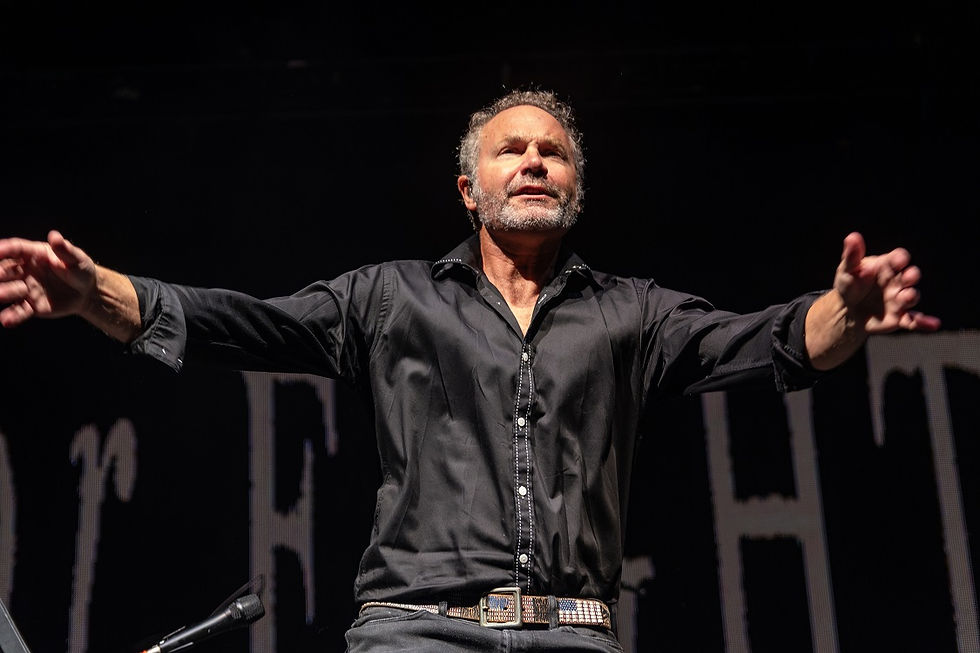
How was the experience of playing for… like I know that you did a concert for Ukraine, and you've obviously played for soldiers and for presidents. How do those types of things shape your perspective as an artist and songwriter?
They certainly exposed me to the world in a way that I would never be exposed without these experiences. Going to Ukraine, performing in a blown-up airport during the middle of a war. Having air raid sirens going off and being scared. Going to Hostage Square in Israel the night that Iran bombed for the first time. Those will give you a unique perspective. But also just into the human experience; when you do this, you see all aspects of humanity. You see tragedy. You see inspiration. You meet amazing people. I would say for me the greatest blessing is the people that I've met. True heroes. People that nobody would know walking down the street. Some things I can't even talk about because they're classified. That kind of stuff just gives you perspective. First of all, when I think I have a problem, I realize I don't have a problem. (laughs) I don't have a real problem. It gives you perspective but also gives you inspiration to keep on doing it. Keep on it when it resonates with folks. Me and Gary have some other things planned, and I'll be doing the Tunnels To Towers gala this year. So again, it's just wonderful to support great people and great causes.
Just on a much more basic idea, the music business has changed so much since you got into it. Sales are obviously lower. There's streaming, piracy, YouTube, all that. If Five For Fighting was coming up now, do you think you would have been able to find an audience and actually make a career out of the band?
That's a good question. I don't know. I like to think that it still comes back to the song. I'm naive, but I still think at the end of the day, a song that can capture the moment, the zeitgeist of the nation, whatever is going on in the culture, is a song you'll hear 25-30 years from when you wrote it. Look at the music of the 70s; we still hear it everywhere. Why? Because the songwriting was just so elite.
Yes, it was.
On the other hand, there's more opportunity to be heard these days. Back in the day, if you didn't have a record company, you weren't getting on the radio. Now you can be in your basement, put a song on YouTube, and find an audience. You're not beholden to a record company, which I think is healthy. At the same time, it's as you said, it's harder to make a living in the music business because the money's come out. So beyond 23 years old, how do you make a living doing music? That's challenging as well. With any technology, there's good and bad with it. I would hope that my songs would still be relevant today. I think the sentiments are. In many ways with “Superman,” frankly, with how it's being embraced by the Jewish community in the last two years, it may be more relevant now than ever, so you never know. A lot of it is just fate and luck, and I certainly understand that. (laughs)
That's actually close to my last question here. When you think about your legacy as a songwriter, what do you hope that people say about the work that you've created over the years?
I just hope that the songs made them walk a little lighter, and maybe were there in times of crisis in their life that maybe helped them through that. The same guy that you heard on the record was the guy that you talked to after the show. Just somebody who's grateful to do it, and somebody who loves America and loves our troops, and had a couple songs that might have carried you along a little bit.
Thank you so much for speaking with me again, John, and best of luck with the tour. I'm hoping to see you in about a month or so.
Well, please come back, say hello, meet Olivia. Let's not wait 22 years to chat again. (laughs)
Copyright ©2026 PopEntertainment.com. All rights reserved. Posted: September 18, 2026.
Photos ©2026 by AsburyParkVibes and Carpe Tempus Photography. Courtesy of 37-Media. All rights reserved. Posted: September 17, 2026.


Comments